Before you learn to throw, you learn to land. There is a reason for that.
One of the first things we teach a new Aikido student is how to fall.
This can seem slightly backwards.
You've come to learn a martial art, perhaps expecting throws, locks and self-defence — and instead we're teaching you how to meet the floor.
There is a good reason for that.
Before you can explore what Aikido can do to somebody else's balance, you need to become comfortable losing your own.
That is where ukemi begins.
What Is Ukemi?
Ukemi (受身) is often translated simply as “breakfall” or “the art of falling”.
But that doesn't quite describe it.
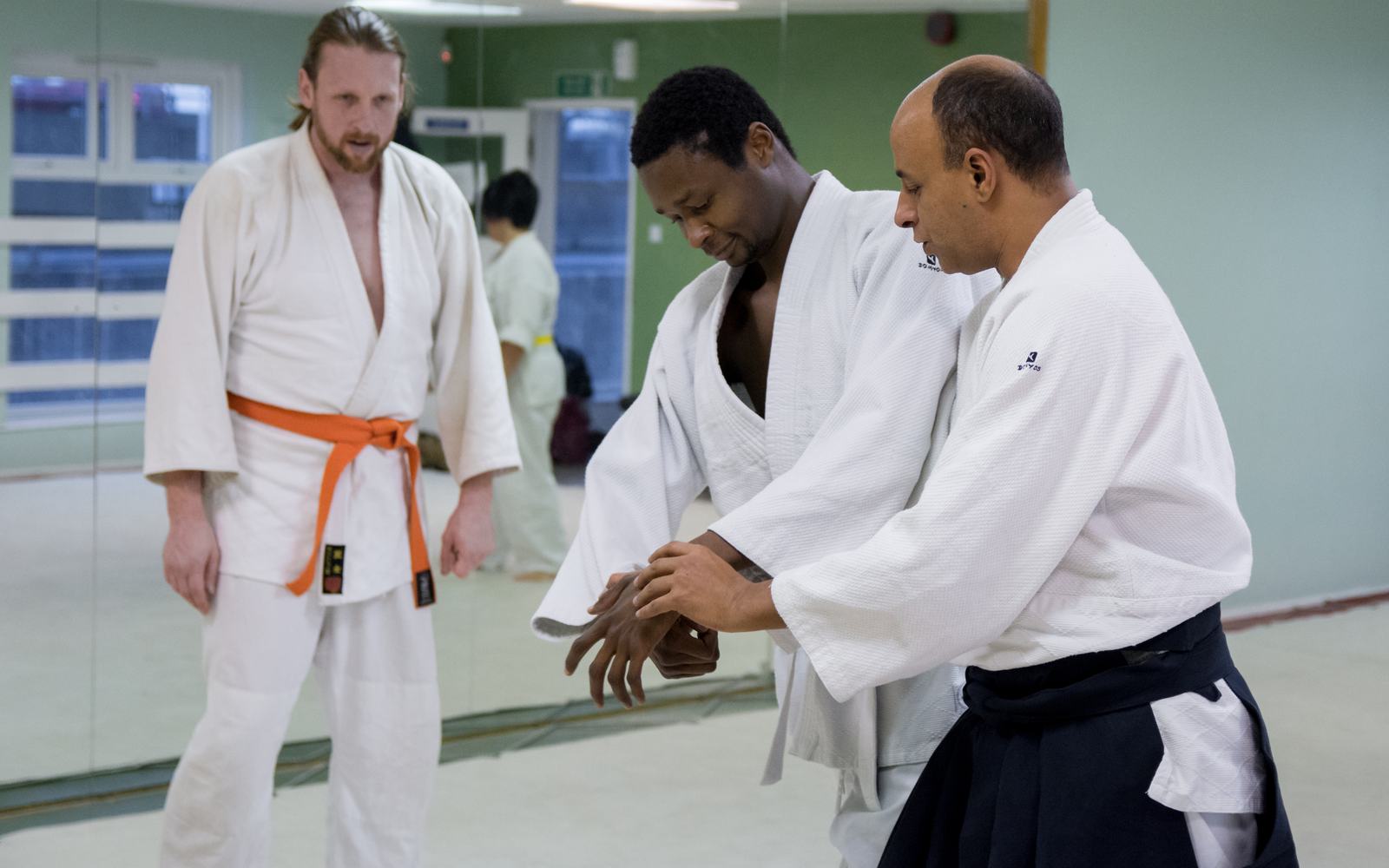
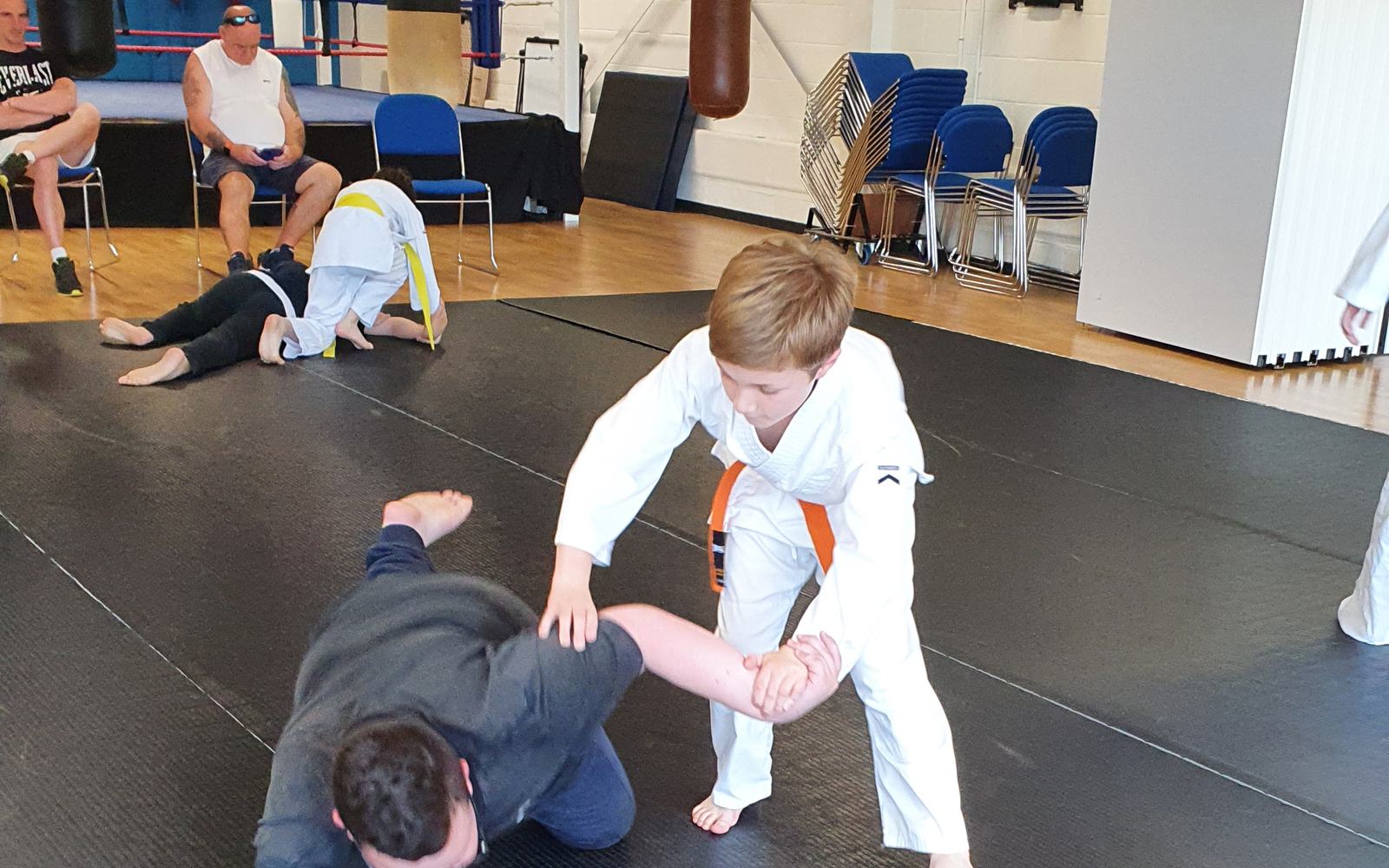
In Aikido, uke is the person receiving the technique. Ukemi is the skill of receiving that technique safely and intelligently.
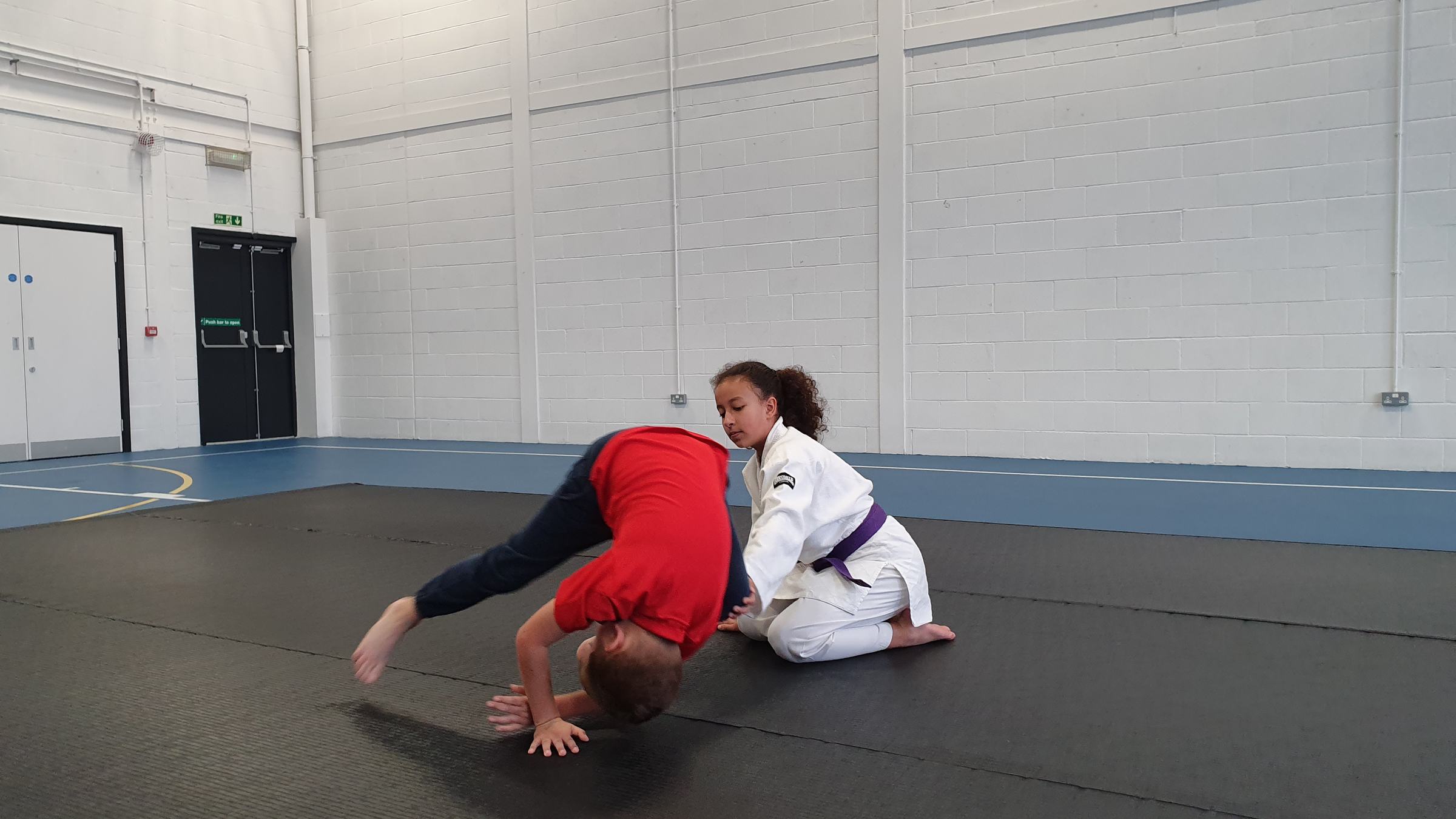
Sometimes that means rolling.
Sometimes it means falling.
Sometimes it means moving, turning or changing your position as the technique develops.
The important part is that you learn how to protect yourself while remaining connected to what is happening.
Good ukemi isn't just an impressive roll across the mat.
It is awareness.
First, Make Friends With the Floor
For many beginners, falling is frightening.
That's perfectly understandable.
Most of our lives are spent trying not to fall over. Then you walk into an Aikido dojo and somebody tells you we're going to practise doing exactly that.
So we don't begin by launching beginners dramatically through the air.
We start close to the ground.
You learn how to position your body.
How to protect your head.
How to avoid putting yourself into vulnerable positions.
How to distribute the impact safely.
How to roll.
How to relax.
And, importantly, how to get back up.
As confidence grows, the movements grow with it.
The floor hasn't changed.
Your relationship with it has.
Fear Changes the Way We Move
When people are frightened of falling, the body naturally becomes tense.
We stiffen.
We grab.
We resist.
Sometimes those reactions can make a fall more awkward than it needs to be.
Ukemi gradually teaches the opposite.
Instead of desperately trying to stop something that is already happening, you learn to recognise where the movement is going and protect yourself within it.
That doesn't mean becoming passive.
It means responding intelligently.
There is a considerable difference between being thrown and simply surrendering control of your body.
A good uke is active throughout the technique.
Uke Is Not the Loser
This is particularly important in Aikido because training doesn't need to be understood as one person winning and another losing.
One person performs the technique.
The other receives it.
Then we change roles.
Without good ukemi, your partner cannot safely practise good technique.
And without a partner applying good technique, you cannot develop good ukemi.
Both people are learning.
In fact, experienced practitioners often make excellent training partners precisely because their ukemi allows someone else to explore a technique safely.
Being the person who falls does not make you the person who lost.
Sometimes it makes you the person who understands exactly what happened.
Learning to Protect Yourself
Ukemi is also one of the most immediately practical skills taught in Aikido.
Not every fall happens because somebody performed an Aikido technique.
People trip.
Children fall while playing.
Feet slip.
Bicycles disagree with their riders.
Ice occasionally reminds us who is really in charge.
No martial art can make every accidental fall harmless, of course. But becoming familiar with falling, rolling and protecting yourself can be a valuable physical skill.
For children especially, learning to fall becomes part of developing coordination, body awareness and confidence in movement.
For adults, it can be surprising to rediscover movements they probably haven't attempted since childhood.
The first roll may feel very strange.
The twentieth usually feels considerably less so.
Ukemi Teaches You to Listen
There is another stage to ukemi that takes longer to understand.
You begin by learning how to fall.
Eventually, you begin learning how to feel.
Where is your partner's balance?
Where is yours?
Where is the technique taking you?
Is there space to move?
Are you resisting something unnecessarily?
Can you recover your balance?
This is why good ukemi isn't choreography.
Uke shouldn't simply decide:
“This is where I'm supposed to fall.”
and throw themselves onto the mat.
The fall should come from the technique.
Ukemi teaches you to stay connected long enough to understand why.
That makes the person performing the technique better too. If the technique doesn't genuinely affect uke's balance, an experienced uke has no reason to manufacture a fall just to make it look successful.
Training becomes a conversation.
One person moves.
The other answers.
Then the roles reverse.
Children Learn It One Step at a Time
Watching an experienced Aikido practitioner perform a fast forward roll or take a high fall can make ukemi look intimidating.
That isn't where beginners start.
At Hizashikan, children and adults learn progressively.
We build confidence before speed.
Control before height.
Understanding before spectacle.
Some students take to rolling immediately.
Others need more time.
That's fine.
There isn't a prize for reaching the floor first.
The aim is to develop safe movement and confidence at a pace appropriate to the student.
Over time, something that initially seemed frightening can become one of the most enjoyable parts of training.
Falling Is Only Half the Lesson
There is a little moment in every ukemi that is easy to overlook.
You get back up.
Again.
And again.
And again.
During a normal Aikido class, you may lose your balance and get back to your feet dozens of times.
Nobody applauds.
Nobody gives a motivational speech.
It's simply what we do.
Perhaps that's why the lesson becomes so natural.
You don't spend your energy being embarrassed that you fell.
You learn what happened, stand up and continue training.
Children learn this.
Adults learn it.
Black belts are still doing it decades later.
Experienced Students Still Practise Ukemi
Ukemi isn't something you learn during your first few months and then leave behind.
As techniques become more dynamic, the demands on uke change.
Timing becomes more important.
Awareness becomes more important.
Relaxation becomes more important.
The ability to protect yourself while remaining responsive to your partner becomes increasingly sophisticated.
So although a beginner may look across the dojo and think:
“One day I'll finish learning how to fall.”
the experienced student knows something different.
There is always another fall to understand.
Before You Learn to Throw
There is a reason falling appears so early in Aikido training.
It makes training safer.
It builds confidence.
It develops coordination and awareness.
It teaches you how to receive a technique rather than simply endure one.
And it allows your training partner to learn too.
Eventually, of course, you'll learn the throws.
You'll learn the locks.
You'll learn how balance, distance and timing bring techniques together.
But first, we teach you something perhaps even more useful:
how to lose your balance without losing yourself.
And then how to get back up.
Learn Aikido in Coventry
At Hizashikan Aikido, complete beginners are welcome.
You don't need to know how to roll, fall or perform a single Aikido technique before your first class.
That's what the dojo is for.
We teach children and adults in Coventry, and your first class is free.