Not swords and samurai. The parts that still matter when nobody is watching.
Mention Bushido and certain images tend to appear.
Samurai armour. Swords. Ancient battles. Cherry blossom drifting dramatically across a Japanese landscape.
There is nothing wrong with being fascinated by that history.
But if Bushido has anything useful to say to us today, it probably isn't found in pretending that we live in feudal Japan.
It is found in much smaller moments.
How you treat somebody who knows less than you.
What you do when nobody is watching.
Whether you practise honestly when it would be easier to pretend.
How you behave when you have the advantage.
Whether your principles survive when following them becomes inconvenient.
In a modern Aikido dojo, nobody needs to announce that they are practising Bushido.
If the values are genuinely there, you should be able to see them.
Bushido Is More Than Samurai
Bushido is commonly described as “the way of the warrior.”
Over time, different writers and traditions have described its principles in different ways, and it would be misleading to imagine that every samurai throughout Japanese history followed one neat, universally agreed code.
But certain ideas have become strongly associated with Bushido: courage, respect, integrity, compassion, loyalty, honour and self-control.
Those ideas don't require armour.
They don't even require martial arts.
They become interesting when we ask a much simpler question:
What would they look like in ordinary life?
A dojo gives us somewhere to practise the answer.
Respect Is More Than Bowing
Aikido contains plenty of bowing.
We bow when entering the training area. We bow to begin. We bow to our training partners. We bow again when we finish.
To somebody watching for the first time, it can look very formal.
But the bow itself isn't the important part.
You can perform a perfect bow and then treat your partner terribly.
Respect is what gives the gesture meaning.
It is listening when an instructor is teaching.
It is taking care of the person you're practising with.
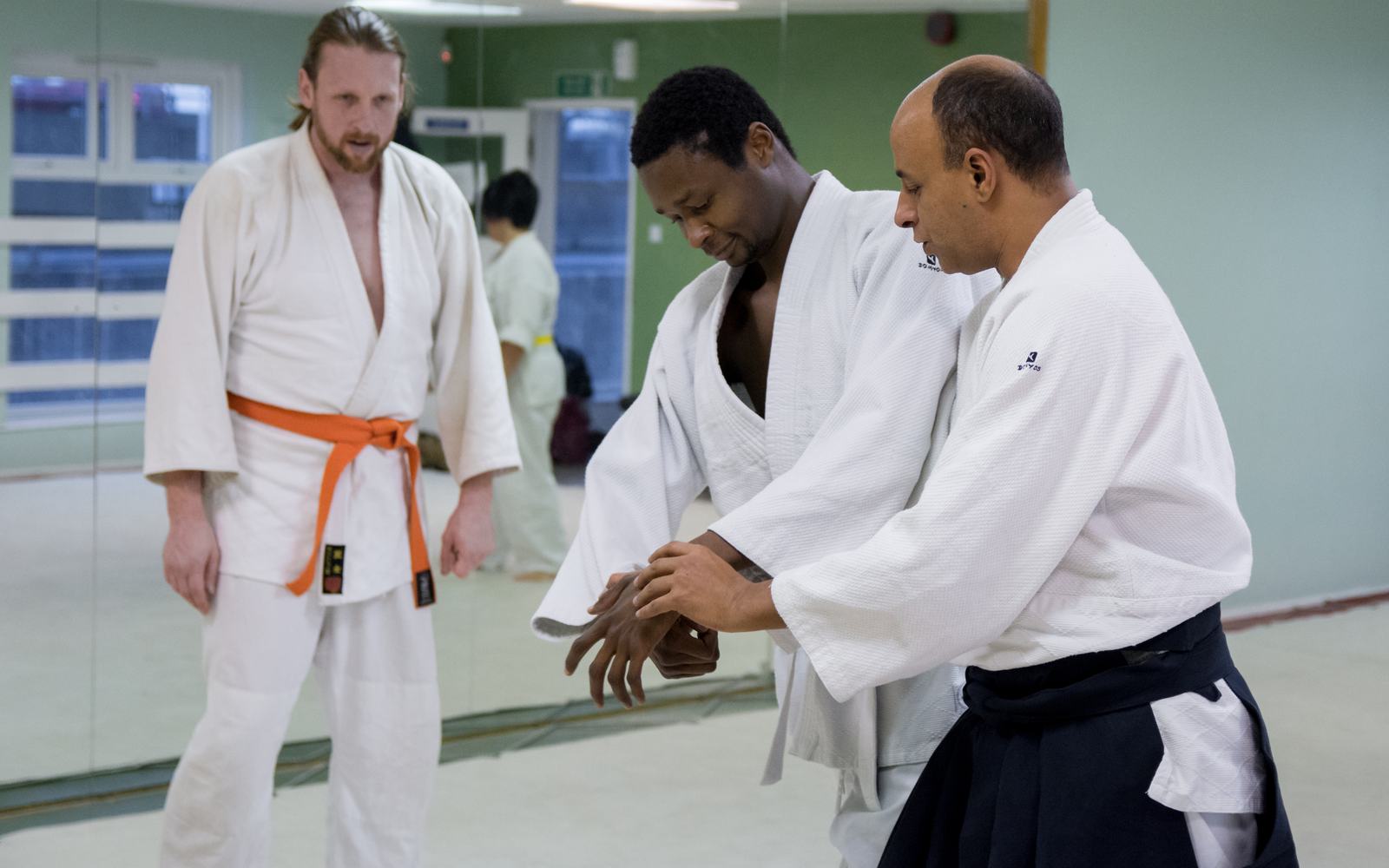
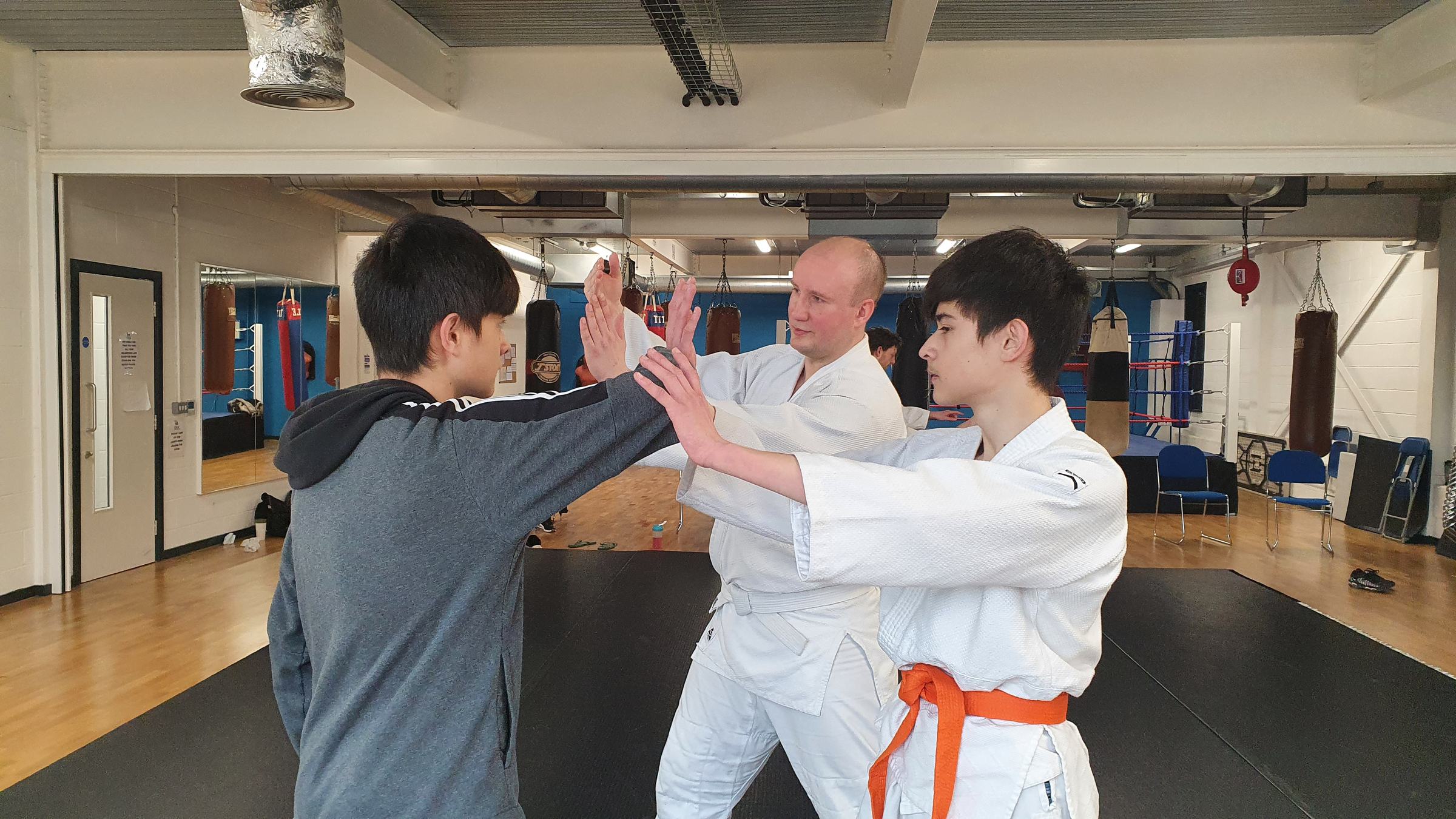
It is recognising that the beginner in front of you deserves the same attention as the black belt.
It is understanding that your partner has temporarily trusted you with their body.
That deserves care.
Without those things, bowing is just choreography.
Courage Doesn't Always Look Brave
Martial arts can give us a rather theatrical idea of courage.
But courage in a dojo is often much quieter.
Sometimes courage is being the person standing outside the door before their first class, wondering whether to walk in.
It is an adult admitting:
“I don't understand.”
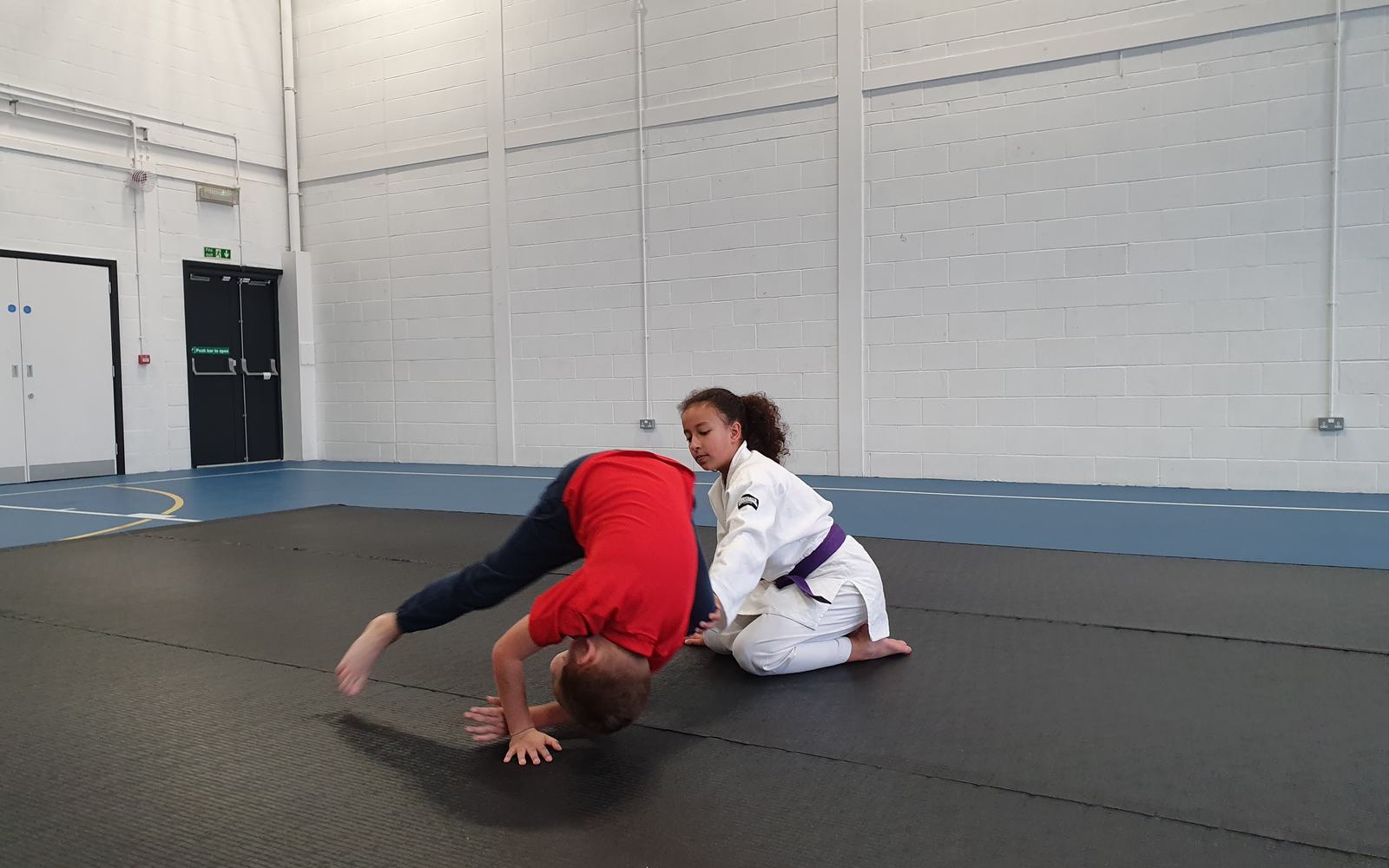
It is a child attempting a forward roll after being frightened of it last week.
It is trying a technique again after getting it completely wrong.
It is training with someone more experienced without worrying about looking foolish.
Courage doesn't require the absence of fear.
Often it simply means doing something worthwhile while the fear is still there.
Integrity Means Not Pretending
Aikido gives us plenty of opportunities to fool ourselves.
A technique doesn't quite work.
Our partner remains standing.
It is tempting for uke to fall anyway.
It makes everything look smoother.
Everyone gets to feel successful.
Except nobody has learned very much.
Honest training means accepting what actually happened.
If the technique didn't affect your partner's balance, find out why.
If your movement was wrong, correct it.
If you don't understand, ask.
There is no shame in a technique failing during practice.
Practice is where it is supposed to fail.
Integrity means being more interested in learning than looking good.
That lesson travels remarkably well outside the dojo.
Compassion Changes With the Person in Front of You
Not every training partner is the same.
A twelve-year-old beginner is not a thirty-year-old experienced practitioner.
A nervous student is not somebody who has trained for twenty years.
People differ in strength, flexibility, confidence, experience and ability.
Good training recognises that.
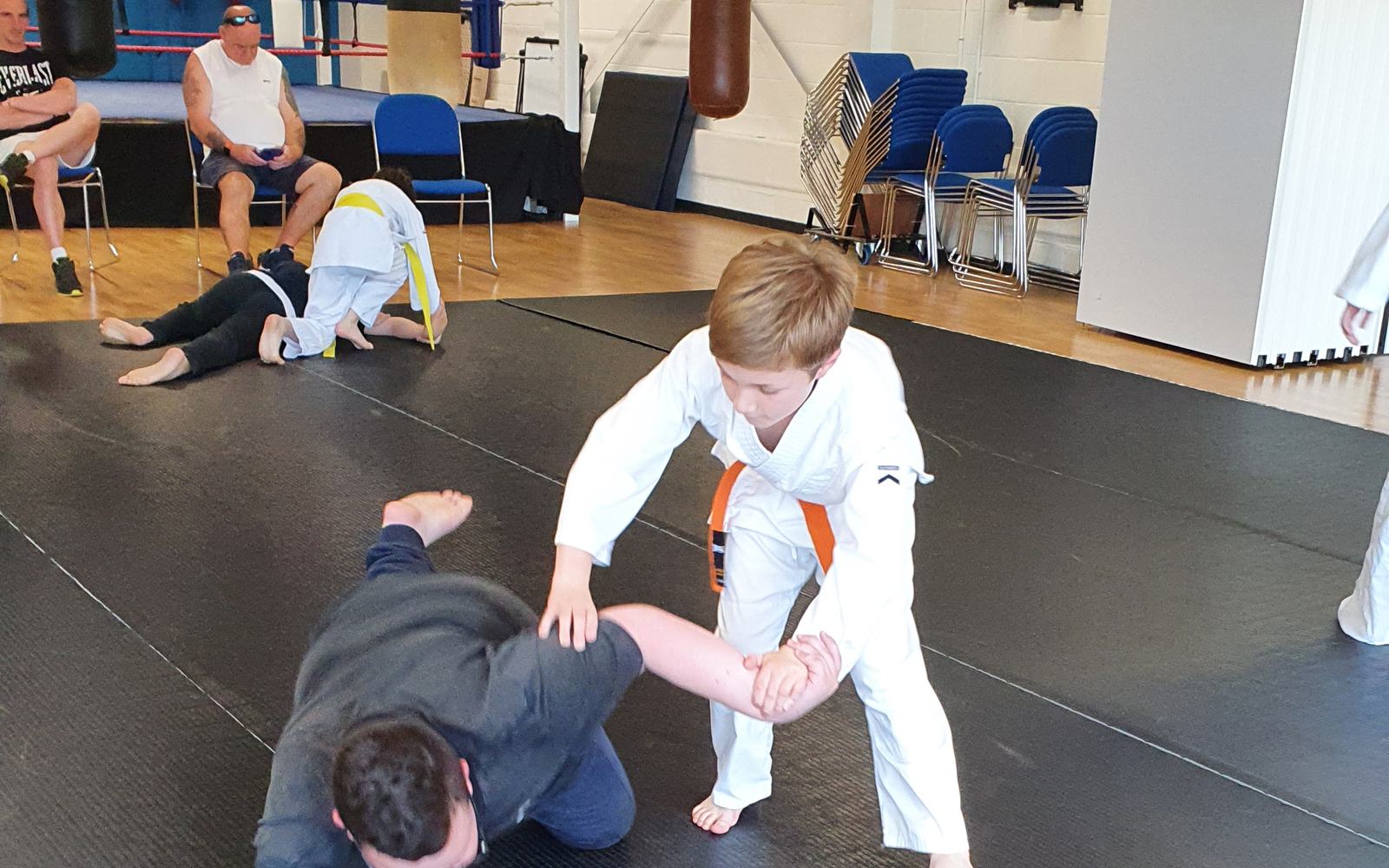
An experienced practitioner doesn't demonstrate their skill by overwhelming somebody who cannot safely receive it.
They demonstrate it by adjusting.
Enough resistance to help.
Enough control to protect.
Enough patience to allow the other person to discover the technique.
The person in front of you determines how you train.
There is strength in that.
But there is also kindness.
Self-Control Is Part of Self-Defence
Learning a martial art gives you responsibility.
The more capable you become of hurting somebody, the less casually you should treat that ability.
That is particularly important when teaching children.
A technique that belongs on the mat does not automatically belong in the playground.
Being provoked doesn't mean you have to accept somebody else's invitation to fight.
Having the ability to respond physically doesn't mean physical force is always the best response.
Sometimes self-defence means moving.
Sometimes it means speaking.
Sometimes it means leaving.
Sometimes it means asking for help.
And sometimes, when there is genuinely no reasonable alternative, it may mean physically protecting yourself.
Knowing the difference requires more than technique.
It requires judgement.
And judgement requires self-control.
Humility Survives the Black Belt
Belts are useful.
Grades recognise progress and give students something to work towards.
But a belt can also become dangerous if we allow it to tell us that we have finished learning.
The longer you practise Aikido, the more you discover how much there still is to understand.
A familiar technique changes when the partner changes.
Timing changes.
Distance changes.
Your own body changes.
Your understanding changes.
Something your teacher told you twenty years ago can suddenly make sense during an ordinary Saturday class.
The beginner knows they don't know.
The experienced practitioner has to remember it.
Perhaps that is why humility and shoshin — beginner's mind — belong so naturally together.
Honour When Nobody Is Watching
Honour is another word that can sound enormous.
It brings to mind reputation, ceremony and dramatic acts.
In ordinary life, honour is usually much less exciting.
Did you keep your word?
Did you behave properly when you could have got away with doing otherwise?
Did you admit the mistake?
Did you help because help was needed, or because somebody important was watching?
In the dojo it might be as simple as putting something away when training finishes.
Helping with the mats.
Welcoming somebody new.
Stopping immediately when a partner is uncomfortable.
Thanking the person who trained with you.
None of these actions deserves a medal.
That's rather the point.
The Quietest Lessons
Some of the most important lessons in a dojo are never formally taught.
A senior student notices that a beginner doesn't know how to tie their belt and quietly helps them.
A child stops a technique because their partner looks uncomfortable.
Someone who has practised for decades listens carefully while a basic technique is demonstrated again.
Students put the mats away without waiting to be asked.
Nobody stands in the middle of the dojo and declares:
“I am now demonstrating Bushido.”
That would rather spoil it.
They simply behave in a way that reflects what they have been practising.
And perhaps that is where the old ideas become useful.
Not as decoration.
Not as nostalgia.
Not as an excuse to pretend we are samurai.
But as standards we quietly ask of ourselves.
Bushido Beyond the Dojo
Most of us spend only a few hours each week on the mat.
The rest of life happens elsewhere.
At home.
At school.
At work.
In traffic.
During disagreements.
When things don't go according to plan.
That is where ideas such as respect, courage, integrity, compassion, humility and self-control become much harder — and much more valuable.
A dojo gives us somewhere to practise.
Life provides rather more opportunities to test whether the practice worked.
Perhaps that is the part of Bushido worth carrying forward.
Not the sword.
Not the armour.
Not the legend.
The character of the person carrying them.
And especially who that person chooses to be when nobody is watching.
Explore Bushido at Hizashikan
Bushido, Japanese martial culture and the philosophy surrounding Aikido are part of the wider world we explore at Hizashikan.
Our Library brings together books and ideas for students, parents and anyone interested in looking beyond technique to the principles behind the martial arts.